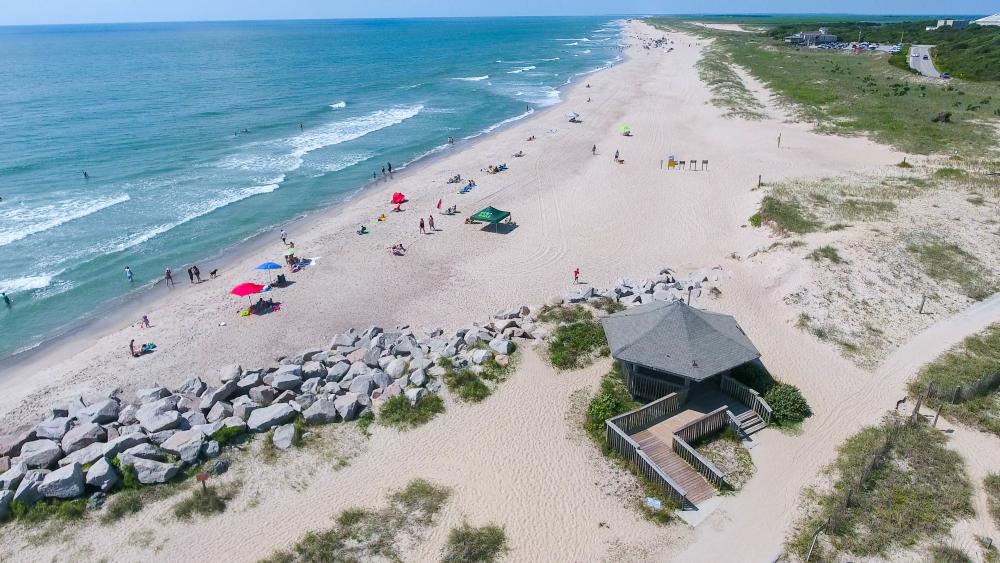




Blink, and you’ll miss it. The Coquina rock formation is one of Kure Beach’s best hidden gems. A rare formation found only in a few places in the world, Kure Beach, North Carolina, happens to be one of them.
This guide is for travelers, shell hunters, the “let’s see what’s past that dune” kind of people. Consider it your cheat sheet to what a coquina rock actually is, where to find it, and why it’s worth building a beach day around.
Photography by Chris R
What is a Coquina Rock, exactly?
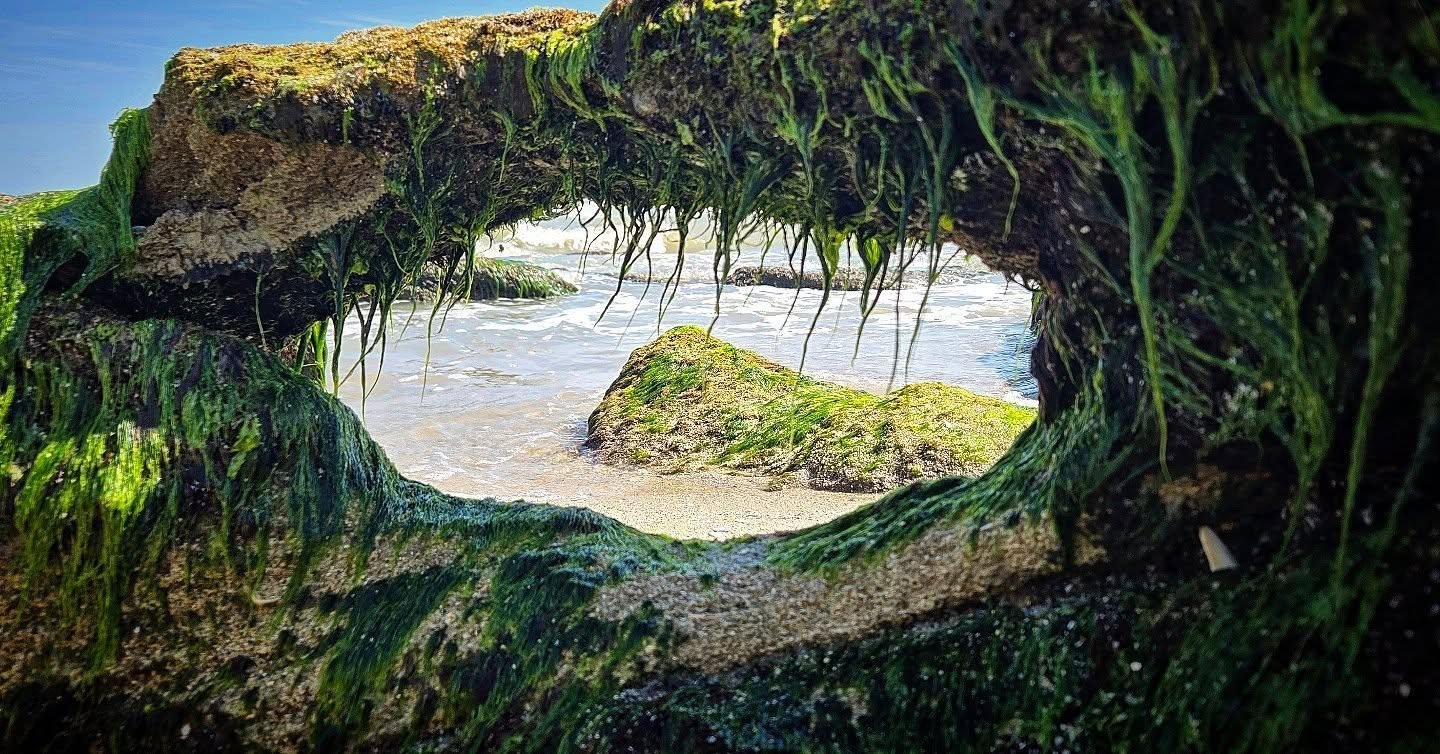
“Coquina” comes from the Spanish word for “cockle”, a nod to the small burrowing clams – Donax Variabilis, for the science folks among us – that make up much of the formation. Millions of their shells, pressed and cemented together over time, became the building blocks of the rock itself.
Coquina is a sedimentary rock, meaning it is built from compacted minerals and sediment, and in Kure Beach’s case, mostly seashells and coral that have been fused together. To technically earn the name “coquina”, the shell fragments need to average 2 millimeters or larger.
Slightly acidic rainwater dissolves the calcium carbonate in the shell, which becomes a glue that cements everything together until it hardens into a porous limestone. If you really think about it, the coquina rocks are basically a time capsule of every creature that has ever washed ashore here.
Because it is soft when wet and firms up as it dries, Coquina has been mined and used as a building material for centuries. The Spanish famously quarried it near St. Augustine on Anastasia Island to build the Castillo de San Marcos National Monument. The walls are so absorbent that cannonballs sank into them instead of shattering them during battles.
Here at Kure Beach, the outcrop is estimated to be over 12,000 years old at least, and today it’s protected, not mined.
Where can you find the Coquina Rocks?
Naturally occurring visible outcrops are rare to find. Kure Beach can make a claim that no other spot on the North Carolina coast can: this is the state’s only naturally occurring rock outcrop.
Since the rocks only show themselves at low tide, seeing them is basically a game of hide and seek with the ocean. Make sure to check the tide chart before you head out, or you may find nothing but waves.
Here is how to get there: head to the southern end of Kure Beach near the Ocean Dunes Condominiums. Park at the public Kure Beach access just south of the Ocean Dunes Rec Center, cross the street and take beach access #1347 to the sand. Walk south, and you will spot a few coquina rocks early on, but keep going until you reach where the full outcrop opens up.
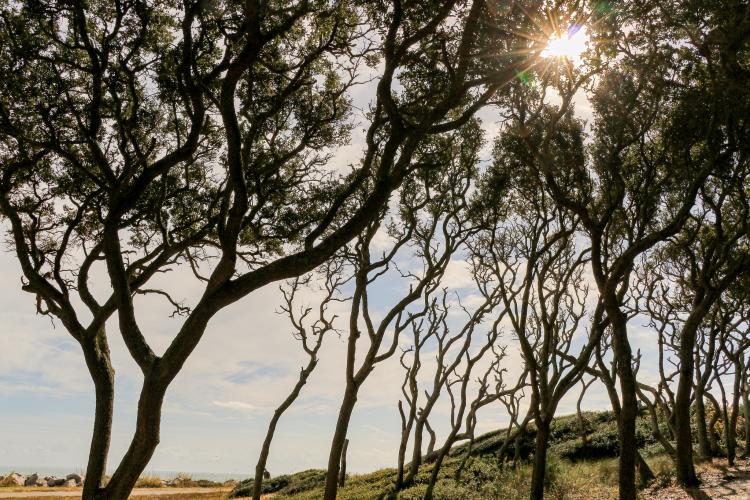
Once you have had your fill of exploring, keep heading south to the rock wall and find a set of stairs leading up to a walking path. It’s less than a mile and winds through beautiful windswept live oaks and a few other ecosystems worth slowing down for.
What you’ll see once you’re there
Right at the ocean’s edge during low tide, look for a cluster of rocks wearing their signature green moss. Look closer and the rocks turn out to be a tiny ecosystem all their own with marine life - a true coastal wonder. Keep an eye out for sea stars tucked in the crevices, hermit crabs on the move, and the occasional conch shell peeking out. Catch it at sunrise or sunset to really see the colors and shimmer come alive!
Plan your Coquina Rock Beach Day
Pair a day of coquina rock hunting with our perfect day at Kure Beach guide. Enjoy some time relaxing by the sea at Fort Fisher, hiking in nature’s playground, eating Carolina seafood or visiting nearby Carolina Beach.
Download our mobile trip guide for other ways to explore Wilmington and Island Beaches.